
From your first message to your safe return home — we handle everything, step by step.
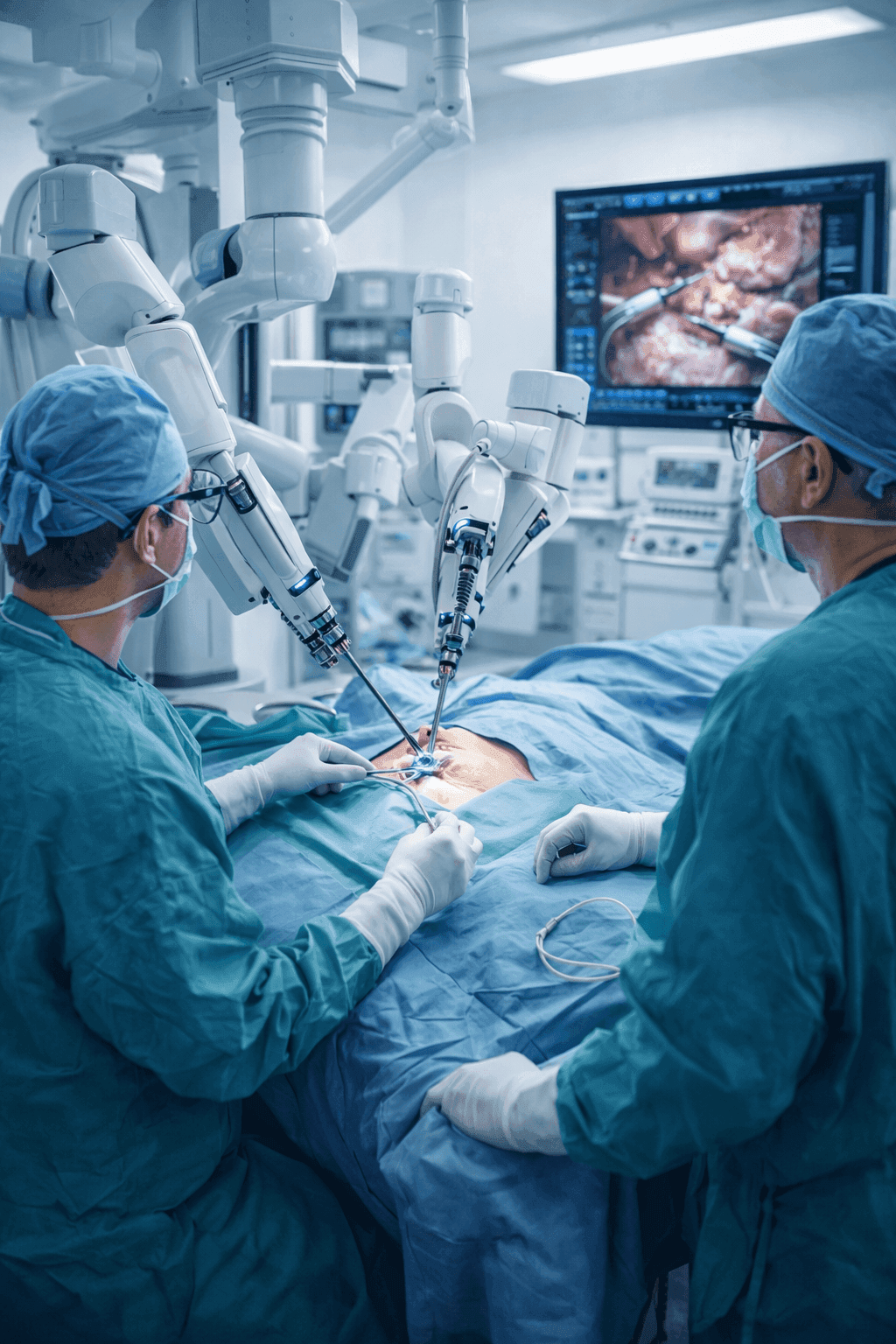
HealBridge connects international patients with leading robotic surgery specialists and advanced surgical centers in Türkiye, providing access to modern minimally invasive surgery supported by the latest robotic technology.
Through our network of partner hospitals, patients may benefit from highly precise robot-assisted surgery for selected procedures in cardiovascular surgery, general surgery, gynecology, urology, and obesity surgery.
From consultation and surgical planning to post-operative recovery, HealBridge coordinates a seamless treatment journey designed to improve outcomes, reduce recovery time, and enhance the patient experience.
Robotic Surgery is an advanced form of minimally invasive surgery in which the surgeon uses a robotic system to perform highly precise surgical movements through small incisions.
Unlike traditional open surgery, minimally invasive techniques use smaller cuts and specialized instruments. Robot-assisted surgery takes this one step further by attaching surgical instruments to robotic arms controlled directly by the surgeon.
It is important to note that robotic surgery is not performed autonomously by a robot. Every movement is controlled in real time by an experienced surgeon using a console and a high-definition 3D visual system.
The expertise of the surgeon remains central to the success of the procedure.
A typical robotic surgery system includes:
During the procedure, the surgeon sits at the console and controls the robotic arms using hand and foot controls. The system translates the surgeon's movements into smaller, more precise actions inside the body.
This technology helps improve:
Because of this, robotic surgery can be especially useful in complex procedures performed in narrow or hard-to-reach anatomical spaces.
Robotic Surgery offers important advantages for both surgeons and patients.
Benefits for the Surgeon:
Benefits for the Patient:
Although these benefits can be significant, robotic surgery is not the right choice for every patient. Suitability depends on the medical condition, anatomy, procedure type, and surgeon recommendation.
The most widely used robotic platform globally is the da Vinci Surgical System.
Some HealBridge partner hospitals use advanced robotic systems such as the da Vinci Xi, which is one of the most recognized technologies in modern robot-assisted surgery.
This system supports:
Access to advanced systems like da Vinci Xi can help support high-level surgical precision when used by experienced robotic surgeons.
Modern robotic platforms allow surgeons to perform a variety of minimally invasive procedures throughout the body.
Common areas of robotic surgery may include:
The most appropriate procedure depends on the diagnosis, anatomy, and overall treatment strategy.
Robotic Heart Surgery allows some cardiovascular procedures to be performed without a full open-chest operation.
Instead of opening the rib cage, the surgeon may access the surgical area through small incisions. This can help reduce surgical trauma and support faster recovery.
Procedures that may be performed robotically in selected patients include:
For certain patients who have had previous heart surgery, robot-assisted surgery may offer a less disruptive alternative because it can avoid reopening the original sternotomy area.
Robotic Surgery in General Surgery is often used for procedures involving the abdomen and digestive tract.
This may include treatment for:
Robotic colorectal surgery may be used for conditions such as:
One of the advantages of robotic systems in this area is the ability to work with precision around important nerves and confined spaces.
Robotic bariatric surgery is used in selected obesity procedures, including gastric bypass and other weight loss surgeries. It may help support precision and reduce recovery time in appropriate cases.
Robotic gynecological surgery offers a minimally invasive option for selected women's health conditions.
This may include treatment for:
In selected cases, robotic surgery may help preserve delicate nerve structures and support better post-operative recovery.
Urology is one of the most common fields in which robotic surgery is used.
Procedures may include treatment for:
Robotic Prostatectomy is a minimally invasive surgery used for prostate removal in selected cases.
Potential advantages may include:
Because prostate surgery often involves highly sensitive structures, robotic assistance can be especially valuable in experienced hands.
For suitable patients, robotic surgery may significantly improve the surgical experience and recovery process.
Smaller incisions usually mean less post-operative pain and less visible scarring.
Patients may spend less time in hospital compared with traditional open surgery.
Because robotic surgery is minimally invasive, many patients return to daily activities sooner.
Enhanced precision and visualization may support better outcomes in selected procedures.
Both robotic surgery and traditional laparoscopic surgery are forms of minimally invasive surgery, but they are not identical.
Advantages of Robotic Surgery:
Advantages of Laparoscopic Surgery:
The right approach depends on the patient's diagnosis, the complexity of the procedure, and the surgeon's expertise.
Successful robotic surgery depends not only on technology but also on the surgeon's training and experience.
Surgeons performing robotic procedures typically require:
Because robot-assisted surgery is still surgery, patient outcomes rely heavily on the surgeon's judgment, planning, and technical skill.
The future of robotic surgery is expected to bring even greater precision, improved surgical planning, and broader applications across medical specialties.
Emerging developments may include:
As this field evolves, robotic surgery in Türkiye continues to grow as a highly attractive option for patients seeking modern minimally invasive treatment.
Like all surgery, robotic surgery also involves risks and is not appropriate for every patient.
Possible considerations may include:
A full consultation with an experienced specialist is essential to determine whether robotic surgery is the most suitable treatment option.
HealBridge connects patients with trusted robotic surgery centers in Türkiye offering advanced technology, specialist expertise, and coordinated support for international care.
Patients benefit from:
Our goal is to make advanced robotic surgery in Türkiye safer, clearer, and more accessible for international patients seeking modern surgical care.
What is robotic surgery? Robotic Surgery is a form of minimally invasive surgery in which the surgeon controls robotic arms and instruments to perform highly precise procedures through small incisions.
Is robotic surgery performed by a robot alone? No. The robot does not operate independently. Every movement is controlled by a surgeon at the console.
What are the benefits of robotic surgery? Potential benefits include smaller incisions, less pain, reduced blood loss, faster recovery, shorter hospital stays, and improved surgical precision.
What procedures can be performed with robotic surgery? Depending on the center and specialist, robotic surgery may be used in cardiovascular surgery, gynecology, urology, bariatric surgery, colorectal surgery, and kidney surgery.
What is robotic prostatectomy? Robotic prostatectomy is a minimally invasive procedure for prostate removal using robotic assistance, often allowing highly precise dissection around sensitive structures.
Is robotic surgery better than laparoscopic surgery? Not always. Both methods are valuable. The best approach depends on the procedure, patient condition, and surgeon expertise.
Why do international patients choose Türkiye for robotic surgery? Patients often choose robotic surgery in Türkiye because of advanced surgical centers, experienced specialists, access to modern robotic systems, and cost advantages compared with many Western countries.