
From your first message to your safe return home — we handle everything, step by step.
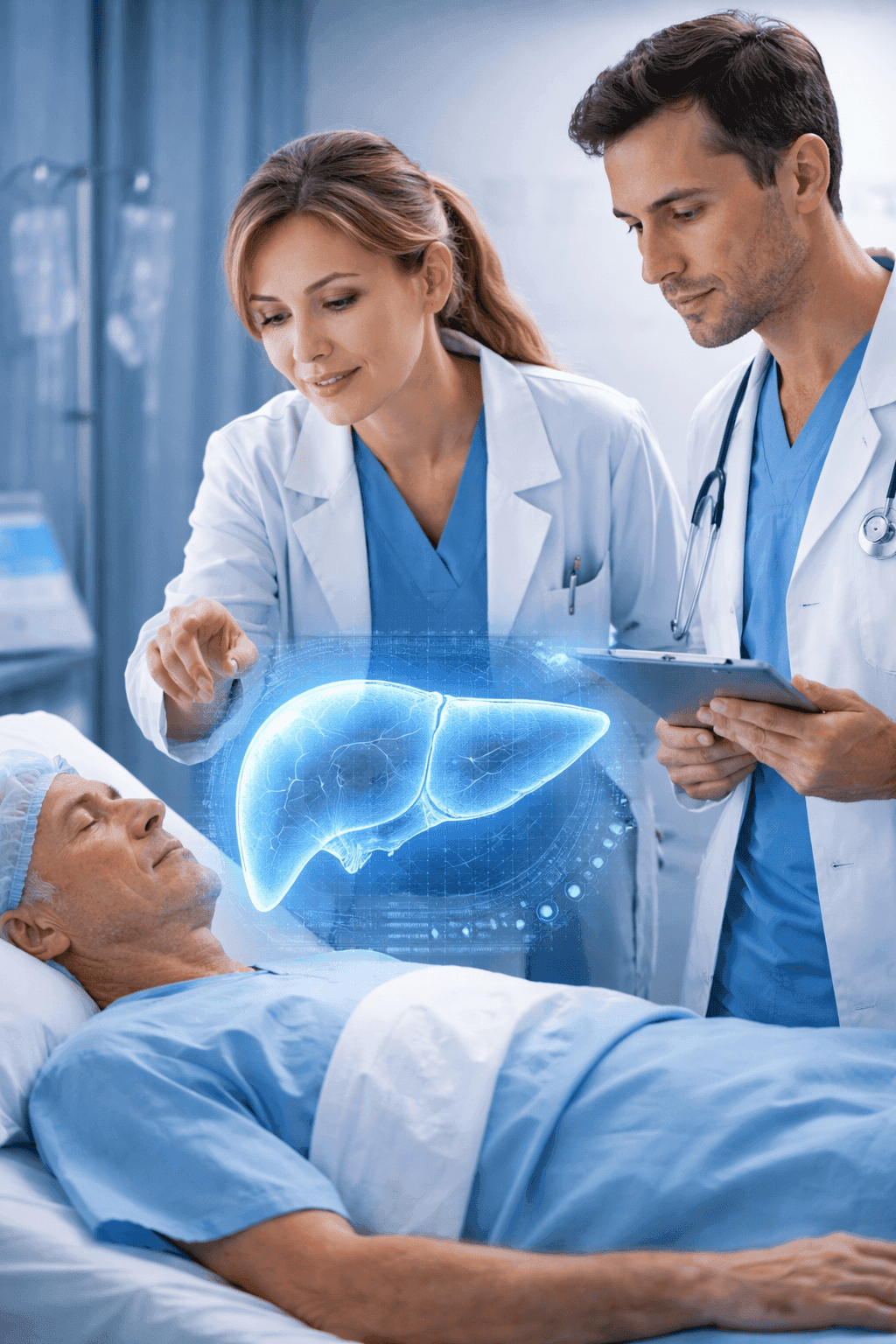
HealBridge connects international patients with leading liver transplant surgeons and advanced transplant centers in Türkiye, providing access to complex liver transplant surgery for patients with severe liver disease.
Through our network of specialized transplant hospitals, patients can receive expert evaluation, surgical treatment, and long-term follow-up for end-stage liver disease, liver failure, and complex hepatology conditions.
Liver transplantation is one of the most advanced procedures in modern medicine. HealBridge supports patients and families throughout the entire process — from medical review and donor evaluation to surgery and post-transplant care.
A liver transplant is a life-saving surgical procedure used to treat end-stage liver disease or severe liver failure when the liver can no longer function properly.
The liver performs many essential roles in the body, including:
When the liver fails, transplantation may become the only effective long-term treatment.
During liver transplant surgery, the diseased liver is removed and replaced with a healthy donor liver. The surgeon reconnects the blood vessels and bile ducts so the new liver can function normally in the body.
The most widely used technique is Orthotopic Liver Transplantation, where the new liver is placed in the same anatomical position as the original organ.
Liver transplantation may be considered for patients with serious liver diseases such as:
Each patient requires detailed evaluation to determine whether transplantation is the most appropriate treatment option.
Globally, the number of patients needing a liver transplant is much higher than the number of available donor organs.
Many countries rely on deceased donor transplant waiting lists, which can lead to long waiting times.
For international patients, an alternative option may be Living Donor Liver Transplantation, provided a medically suitable donor is available.
HealBridge helps coordinate medical evaluation and transplant planning for patients exploring treatment options in Türkiye.
One unique feature of the liver is its ability to regenerate. This allows Living Donor Liver Transplantation, where a portion of a healthy donor's liver is transplanted into the recipient.
Over time, the liver regenerates in both the donor and the recipient.
Benefits of living donor liver transplantation may include:
However, living donor transplantation is a complex procedure requiring strict medical evaluation to ensure the safety of both donor and recipient.
Both individuals must undergo detailed medical, psychological, and surgical assessments before the procedure can proceed.
Pediatric liver transplant procedures differ from adult transplants and require highly specialized surgical expertise.
Children may require liver transplantation due to conditions such as:
Because pediatric anatomy involves smaller blood vessels and more delicate structures, the surgery is technically demanding and requires experienced transplant teams.
Some advanced transplant centers also perform combined liver–kidney transplantation for certain metabolic conditions affecting multiple organs.
Before proceeding with liver transplant surgery, both donor and recipient must undergo comprehensive medical evaluation.
Assessment may include:
Typical donor eligibility requirements may include:
This evaluation ensures the highest level of safety for both donor and recipient.
For international patients, the liver transplant journey typically begins with a remote medical review.
Patients are asked to provide:
After an initial evaluation, both donor and recipient may undergo further medical testing at the transplant center.
Once the medical team confirms suitability, liver transplant surgery is scheduled.
In living donor transplantation, the donor and recipient operations are performed simultaneously.
After surgery:
International patients are usually advised to remain in Türkiye for several weeks after discharge for follow-up evaluation and medical monitoring.
Advances in surgical techniques, organ preservation, and post-transplant care have significantly improved liver transplant survival rates over the past decades.
Success depends on many factors including:
Today, many transplant centers report high one-year and five-year survival rates, even in complex adult and pediatric transplant cases.
After a liver transplant, patients can often return to a healthy and active life with proper medical care and lifestyle management.
Important aspects of post-transplant care include:
For living donors, the liver typically regenerates within several months, allowing them to return to normal daily activities under medical supervision.
HealBridge connects patients with highly experienced liver transplant specialists and advanced transplant centers in Türkiye capable of performing complex transplant procedures.
Patients benefit from:
Our goal is to help international patients safely access advanced liver transplant treatment in Türkiye, guided by expert medical teams and comprehensive support throughout the process.